


Table of Contents
| Table of contents | pp. v–v | 📄Front Matter | 🔒Closed | |
| Tables and Figures | pp. vi–vi | 📄Front Matter | 🔒Closed | |
| Acknowledgements | pp. vii–vii | 📄Front Matter | 🔒Closed |
| [Chapter 1] Introduction: Platforms in Culture and Society |
pp. 1–23 | 📄Chapter | 🔒Closed |
| [Chapter 2] Understanding Platforms | pp. 24–66 | 📄Chapter | 🔒Closed | |
| [Chapter 3] Profit and Power | pp. 67–119 | 📄Chapter | 🔒Closed | |
| [Chapter 4] Governance and Regulation | pp. 120–157 | 📄Chapter | 🔒Closed |
| [Chapter 5] Conclusion and Outlook | pp. 158–185 | 📄Chapter | 🔒Closed |
| Glossary | pp. 186–193 | 📄Back Matter | 🔒Closed | |
| Notes | pp. 194–195 | 📄Back Matter | 🔒Closed | |
| References | pp. 196–212 | 📄Back Matter | 🔒Closed | |
| Index | pp. 213–224 | 📄Back Matter | 🔒Closed |
Platforms Everywhere: Understanding What Platforms Are and How to Study Them
For years, public and academic debates about platforms revolved largely around social media. Concerns centred on Facebook’s News Feed, YouTube’s recommendation systems, Twitter’s role in political communication, influencer culture, content moderation, data privacy, and the growing power of social media companies over public discourse.
Today, the platform landscape looks different again. Public attention has shifted toward artificial intelligence and new kinds of infrastructural platforms: generative AI systems such as ChatGPT and Claude, AI assistants embedded into search engines and smartphones, AI image generators, and the cloud infrastructures that underpin AI development itself. Companies such as Microsoft, Google, Amazon, Meta, and OpenAI are now competing not only over apps and users, but over the infrastructures, models, and ecosystems that shape the future of AI.
Yet many of the underlying questions remain remarkably familiar. Urgent concerns about concentration of power, data extraction, infrastructure dependency, governance, labour, visibility, and control continue to resurface across these technologies. This continuity reflects a broader shift: platforms are no longer merely apps or websites. They increasingly function as infrastructures of everyday life that organise communication, commerce, cultural production, logistics, education, and artificial intelligence itself.
This is the starting point of our book, Platforms: A Critical Introduction (Polity, 2026). The book offers an accessible introduction to the field of critical platform studies, its key concepts and methods, while also developing a framework for understanding how platforms operate, evolve, and exert power across contemporary societies.
Rather than approaching platforms simply as online intermediaries or consumer-facing applications, we argue that they should be understood as socio-technical systems that simultaneously operate as services, companies, and technologies or infrastructures. Across these dimensions, platforms act as powerful convenors and shapers: they bring together users, developers, advertisers, businesses, governments, and institutions, while structuring the conditions under which these actors interact.
What is a platform?
The term ‘platform’ is now used to describe an enormous range of digital services and technologies: social media platforms, streaming platforms, cloud platforms, AI platforms, app platforms, gig-work platforms, marketplace platforms, and more. Companies such as Google, Meta, Amazon, Apple, Microsoft, Tencent, and ByteDance are routinely described as ‘platform companies’, despite operating across different sectors and infrastructures.
The term’s widespread use partly reflects platforms’ growing importance, but it also creates conceptual ambiguity. Not every platform works in the same way, and platforms rarely operate in only one domain. Apple, for example, is simultaneously a hardware company, software provider, app ecosystem operator, cloud infrastructure actor, and subscription service provider.
Our book starts from this complexity. We define platforms as socio-technical systems that organise and structure interactions between different groups of actors while generating dependencies around their services, infrastructures, and ecosystems.
To study this complexity, we propose approaching platforms through three interconnected dimensions.
- First, platforms are services. This dimension focuses on the user-facing products and interfaces through which people encounter platforms in everyday life: TikTok, Instagram, X (formerly Twitter), Netflix, Spotify, Uber Eats, or Amazon Marketplace. Here, platforms shape communication, consumption, labour, entertainment, and visibility through interfaces, recommendation systems, monetisation mechanisms, and moderation policies.
- Second, platforms are companies. Platforms are owned and operated by corporations pursuing strategic and economic objectives. This dimension foregrounds business models, acquisitions, partnerships, ownership structures, and ecosystem strategies. It highlights how companies such as Meta, Alphabet, Amazon, Microsoft, or ByteDance expand across sectors while consolidating infrastructural and economic power.
- Third, platforms are technologies and infrastructures. Platforms rely on programmable technical architectures such as APIs, cloud infrastructures, app stores, software development kits and environments, machine learning systems, and data infrastructures. These systems allow platforms to become foundational infrastructures that other companies, developers, and institutions build upon and depend on.
These dimensions are deeply interconnected. A platform’s technical architecture shapes its business model; governance systems—including content moderation, terms and policies—shape participation; and interfaces shape how users experience and engage with platforms. Studying only one dimension risks missing how platform power operates simultaneously across multiple layers.
Platforms as ecosystems
A second central argument of the book is that platforms should not be studied as isolated entities. Platforms are fundamentally relational systems.
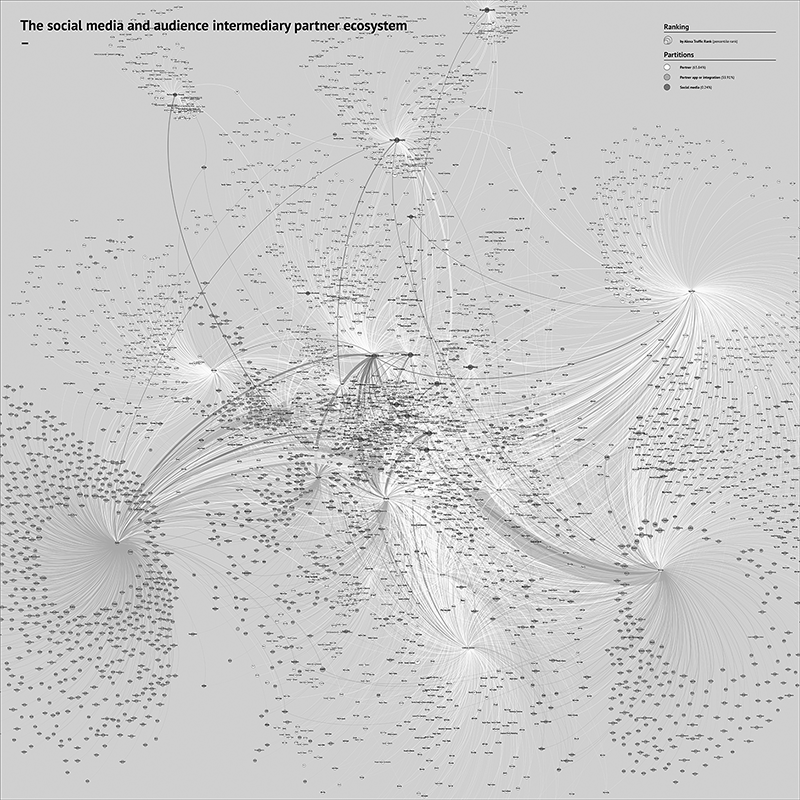
Platforms derive value by coordinating interactions between users, advertisers, developers, creators, businesses, public institutions, and third-party service providers. They operate as ecosystems in which multiple actors become interconnected through shared infrastructures, standards, interfaces, and governance systems.
This ecosystem perspective matters because platforms rarely produce all content, services, or innovation themselves. Instead, they rely heavily on external actors while simultaneously governing the conditions under which those actors can participate—and, in turn, determining whether they can thrive or fail. App developers depend on app stores; creators depend on monetisation systems and recommendation algorithms; businesses depend on advertising infrastructures and platform visibility; and AI developers increasingly depend on cloud infrastructures and foundation models.
Platforms therefore exercise what we describe as convening power: the capacity to bring together and coordinate diverse actors while positioning themselves as indispensable intermediaries within larger ecosystems. This power is not only economic, but also infrastructural and organisational. Once actors become deeply integrated into platform infrastructures, switching away becomes increasingly difficult.
This perspective also changes how we understand platform governance. Governance on platforms does not operate only through explicit rules or content moderation decisions. It is embedded in infrastructures themselves.
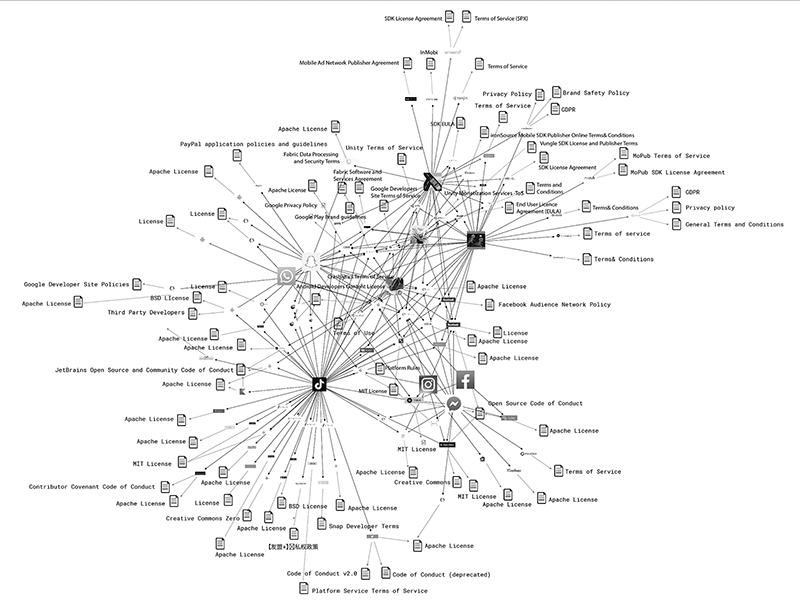
Platforms govern participation through APIs, recommendation systems, developer guidelines, monetisation systems, app review procedures, interface design, ranking algorithms, and data access policies. These technical systems shape what becomes visible, profitable, accessible, interoperable, or even possible within platform ecosystems.
Importantly, platforms govern multiple groups simultaneously. Public debate often focuses primarily on end-users and content moderation, but platforms also govern developers, advertisers, creators, workers, enterprise clients, and public institutions. Understanding platform governance therefore requires examining how governance operates and impacts user practices across entire ecosystems and infrastructures.
Studying platforms infrastructurally
The book also makes a methodological argument. Platforms should not be studied solely through interface analysis, discourse analysis, or user practices, important though these remain. Platforms also need to be studied infrastructurally.
This means examining the less visible layers of platform systems: APIs, developer documentation, cloud infrastructures, partnership ecosystems, technical standards, governance policies, acquisitions, ownership structures, and software dependencies.
To analyse these dimensions, the book connects insights from platform studies, software studies, science and technology studies, political economy, and critical infrastructure studies. Throughout, we emphasise empirical and ‘technographic’ approaches that treat platforms as dynamic and evolving systems rather than static digital objects.
A key concern running throughout the book is that platforms increasingly operate as foundational infrastructures for other sectors and institutions. Cloud infrastructures underpin AI systems, governments rely on platform services for communication and data storage, educational institutions integrate platform tools into teaching environments, and media industries depend on platform distribution systems.
Platforms therefore shape not only digital culture, but also the broader organisation of contemporary societies.
Beyond ‘Big Tech’
Finally, the book argues that platform studies should focus on platforms not just as a set of individual large corporations, often called ‘Big Tech’ (like Google, Meta, or Amazon), but as a broader, pervasive infrastructural logic that reorganises markets, institutions, labour, communication, governance, and public life around programmable ecosystems and data infrastructures.
This process—often described as platformisation—extends platform logics far beyond social media. It reorganises sectors such as transportation, retail, entertainment, education, finance, public services, and artificial intelligence around platform infrastructures and ecosystem dependencies.
Understanding platforms today therefore requires moving constantly between scales: from interfaces to infrastructures, from apps to ecosystems, and from individual companies to broader transformations in digital capitalism and social organisation.
That is ultimately the central argument of Platforms: A Critical Introduction: platforms are not simply technologies we use. They increasingly organise the conditions under which social, cultural, economic, and political life takes place.
The book will be published by Polity in June 2026 (EU) and August 2026 (US), and is available from Polity.